

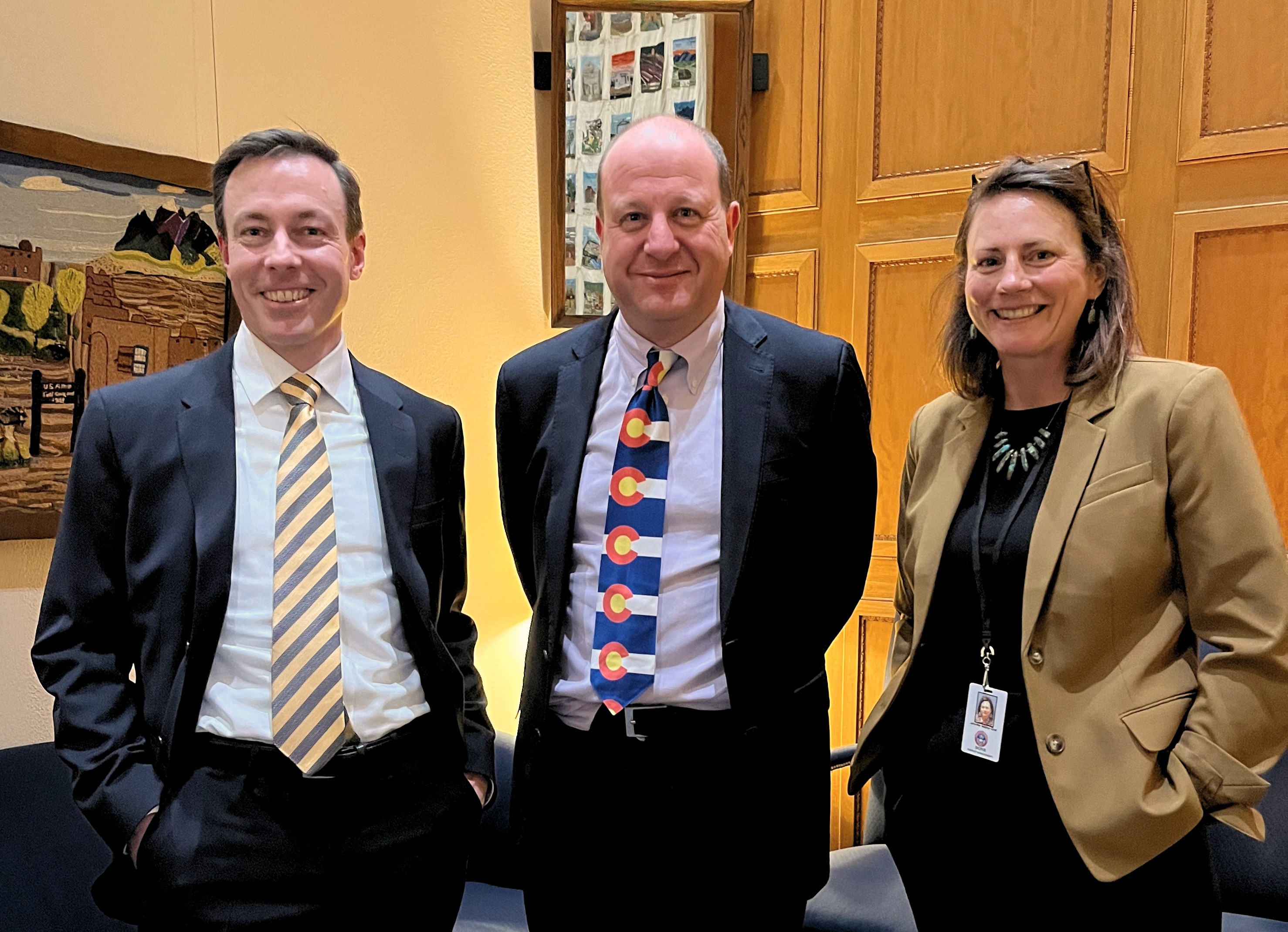
The state is building the policy ground for next-generation geothermal. What it still needs is drilling that reaches theheat fast enough to make projects work. That is why Governor Jared Polis invited Telura to Denver.
In September 2026, Jens Keppler, Business Development Manager at Telura, spent a week in Colorado. The invitation came through the challenge the Governor's office co-hosted with the German Accelerator, which Telura won earlier this year. Polis’ programme Heat Beneath Our Feet was launched in an intense effort to build the right framework for geothermal energy.
A state that decided geothermal is worth the effort
Colorado has put real money behind that decision. Since2023, the state has committed 42.6 million dollars through its geothermal grant and tax credit programmes. The tax credit offering runs through 2032, which gives developers something rare in energy policy: a planning horizon longerthan an election cycle. In 2025, Colorado also passed legislation to streamline geothermal permitting and clarify who oversees it.
The demand side is being legislated too. New data centres inColorado will have to source 75 percent clean energy by 2029, rising to 100percent by 2040. Hyperscale campuses are already under construction along the Front Range. Their operators now have a legal requirement to meet, hour byhour, and wind and solar cannot cover the hours they do not run. Geothermal produces continuously, which is what the law asks for.
Colorado is also one of fifteen states in the Department of Energy's Geothermal Power Accelerator, launched in January 2026 to build state-level resource mapping and policy frameworks.
The ambition is clear. The state wants to become the centerof gravity for geothermal in the US.
Drilling decides where geothermal is possible
The heat is everywhere. Go deep enough anywhere on theplanet and the temperature is there. What varies is how far down you have togo, and that is a drilling question before it is a geology question.
Conventional drilling makes depth expensive in a way thatcompounds. Bits wear down, and replacing one means pulling the entire drillstring back to the surface, sometimes kilometers of it, then running it allback down. The deeper the borehole, the more of the project budget and schedule disappears into that cycle.
Electric Impulse Drilling (EID) attacks the mechanism ratherthan the symptom. Instead of grinding through rock, EID applies high-voltage electrical pulses that break it from within. There is no bit grinding against the rock face, so wear drops and the trips back to surface become rare. Telura is targeting 30 meters per hour in hard rock and a bit life span of 2,000 meters.
Physics has been studied at universities for roughly 25years. Telura is taking the step from laboratory validation to industrial drilling.
Why the National Laboratory of the Rockies matters
The second stop of the week was the National Laboratory ofthe Rockies in Golden, 25 minutes west of Denver.
NLR was known as the National Renewable Energy Laboratory until December 2025, when it was renamed to reflect a broader energy systems mandate. It is part of the Department of Energy's 17-laboratory complex and oneof only three applied labs, meaning its work is aimed at commercialization rather than fundamental research. Its role is to take technologies to the pointwhere they can be demonstrated and deployed, always in partnership with industry.
In September 2026, the DOE named Golden the home of its new Geothermal Center of Excellence, with NLR among the partners. That puts the lab at the center of how the US will test and validate next-generation geothermal technology.
For a drilling technology company, this is where claims meetsubsurface reality. The conversation in Golden covered resource characterization,the engineering questions around drilling at depth, and how a European technology company like Telura can enter the US market in collaboration with a national laboratory.
Two partners for the same mission
Telura’s journey to Denver happened during Colorado StartupWeek, offering an insight into the diverse and collaborative ecosystem that has been built especially in and around Denver. With local institutions like the German American Chamber of Commerce, Innosphere and the Rocky Mountain Institute (RMI), Colorado offers the support it takes to enter the US market.
Between the Governor's office and the national laboratory, Teluramet both partners a technology needs to enter a market: the policy environment that makes projects fundable, and the technical institution that makes them credible.
Colorado has the ambition, the resource and the framework.What it needs is access to the heat. That is the problem Telura is built to solve.
Continue reading
The drilling cost question in deep geothermal

The drilling cost question in deep geothermal
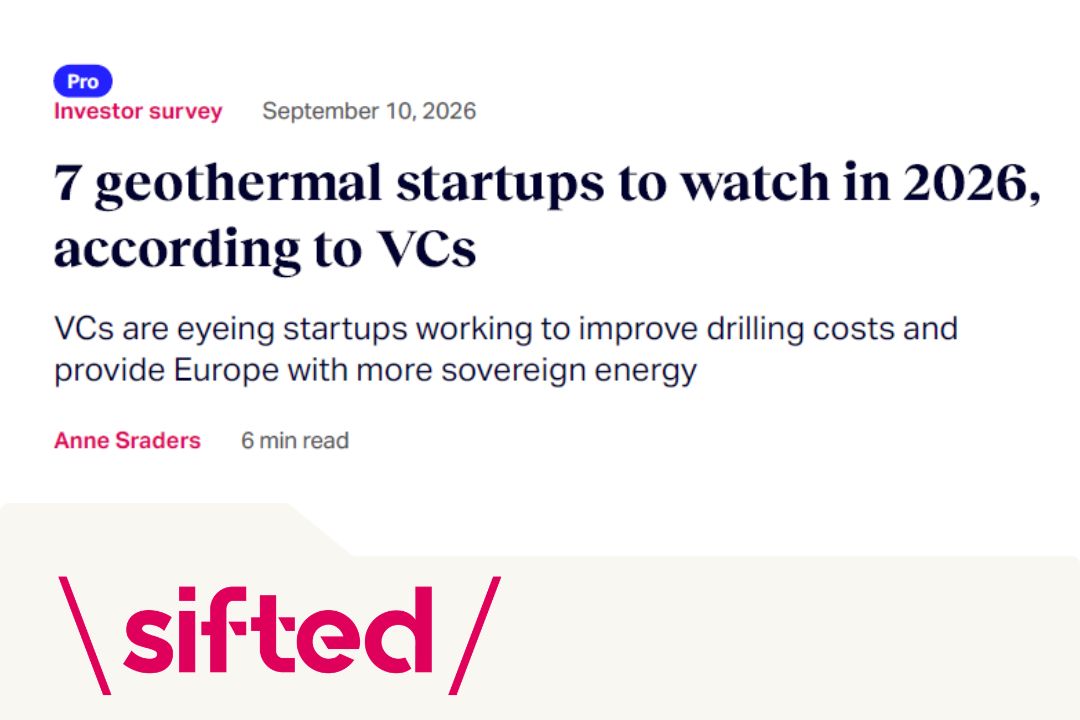
Sifted: Telura named one of seven geothermal startups to watch in 2026
Sifted: Telura named one of seven geothermal startups to watch in 2026
Collaborative effort will unlock geothermal energy
Collaborative effort will unlock geothermal energy

Europe's baseload question, finally on the agenda
Europe's baseload question, finally on the agenda
Telura unveils breakthrough drilling tech to clear Europe’s path to sovereignty with geothermal energy
Telura unveils breakthrough drilling tech to clear Europe’s path to sovereignty with geothermal energy


Follow our progress
Join our mailing list to stay in the loop of the latest developments.