
.avif)
.avif)
The heat has always been there. Drilling was the problem.
Telura’s Electric Impulse Drilling breaks rock with high-voltage pulses instead of grinding through it. Lightning through granite: the rock splits from within.







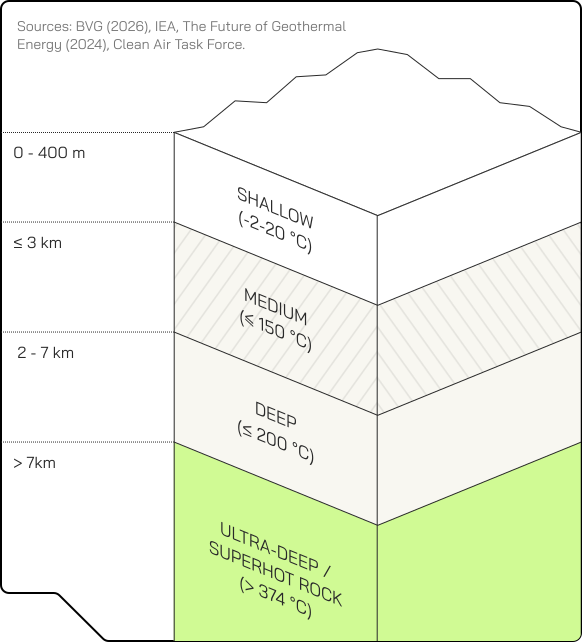
The top ten kilometers of the Earth's crust hold enough heat to power humanity for more than 150,000 years.
Deep geothermal heat comes from the planet's formation and rises about 30 °C per kilometer in Central Europe. Past 374 °C, superhot rock begins: water turns supercritical, neither liquid nor steam, and carries far more energy. The IEA puts the technical potential at over 140 times global electricity demand. The heat was never the constraint: Earth releases 47 terawatts of it continuously, and the question is how fast you can draw it back out.
Geothermal accounts for under 1% of the world's energy mix. Not because the heat is scarce. Because drilling has only been affordable where the geology cooperates. In hard rock, it slows down and the costs spiral.
01 · Bits wear out
01 · Abrasive wear
In hard rock drilling, bits degrade fast in granite and basalt and need constant replacement.
Abrasive, hard rock wears down bits, forcing frequent trips to replace them. That is why cost rises far faster than depth: a five-kilometer hole is not five times a one-kilometer hole.
02 · Progress collapses
02 · Weight-on-bit
Penetration slows to a fraction of the surface rate.
The mechanism relies on gravity forcing the bit into the rock face. It loses effectiveness as deviation increases and drill strings lengthen.
03 · Costs go exponential
03 · Round trips
In hard crystalline rock, the cost curve bends sharply upward.
Changing a bit means pulling the entire drill string to surface and running it back down. At five kilometers that is 24 to 48 hours per trip, resulting in pure cost, zero meters drilled.
In soft sedimentary rock near the surface, conventional drilling works well. Hard rock drilling is a different problem: in crystalline rock like granite and basalt at depth the economics collapse.
Drilling cost rises far faster than depth. A five-kilometer well is not five times a one-kilometer well.
Instead of grinding through rock, Electric Impulse Drilling (EID) breaks it from within. Imagine a bolt of lightning through granite.
Electric Impulse Drilling (EID): a pulse generator, a discharge that prefers rock over fluid, short rise times.
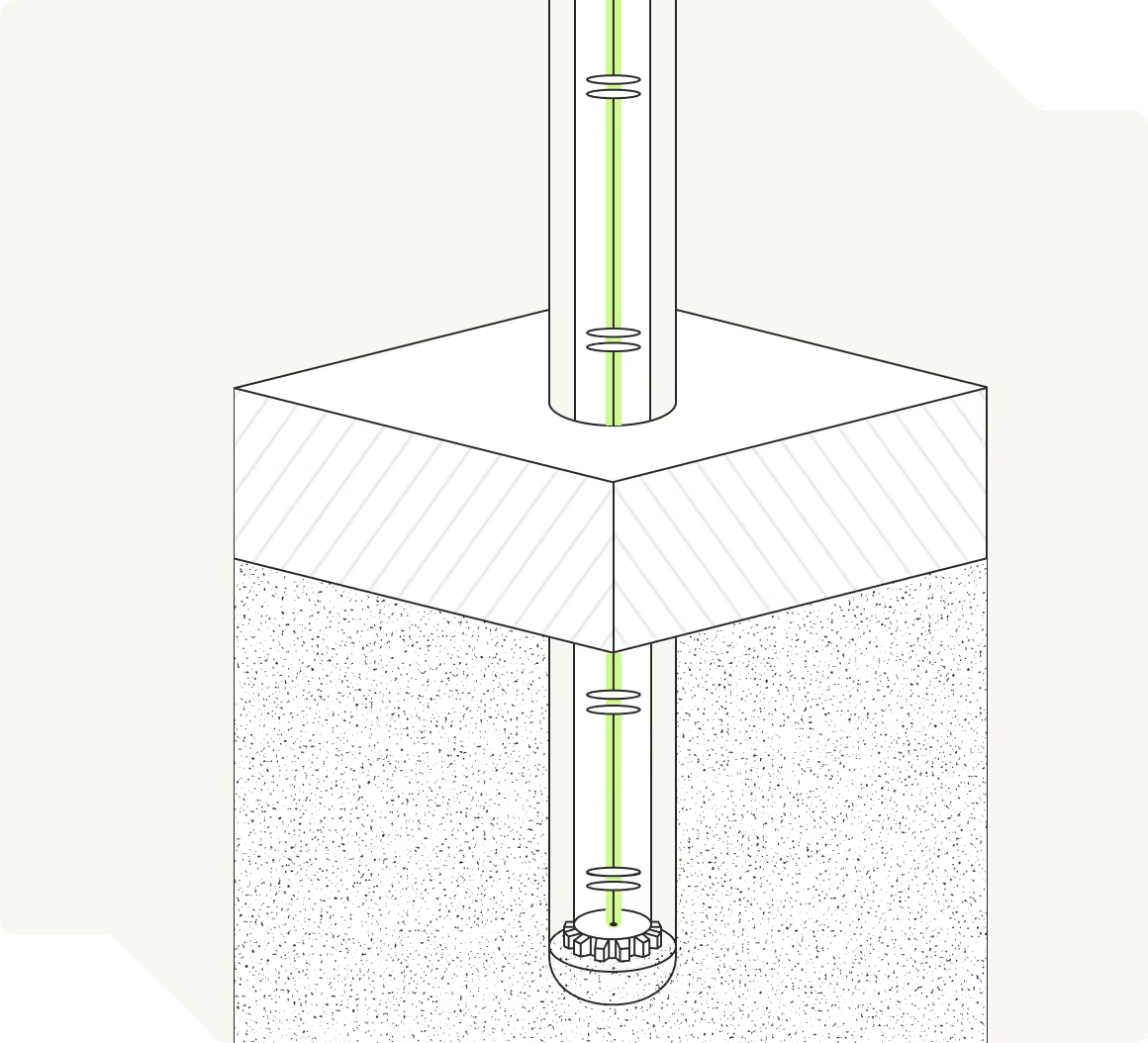
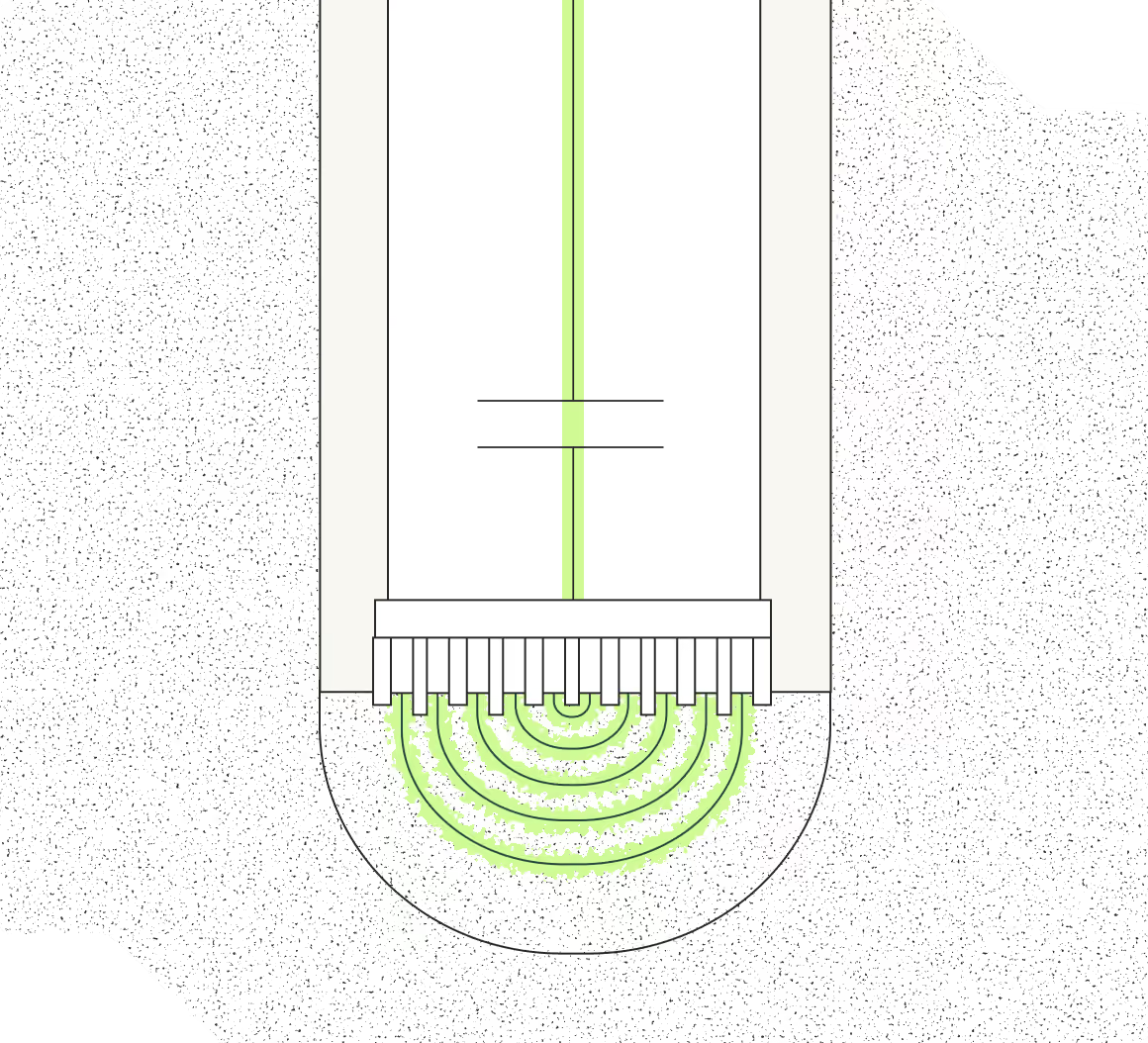
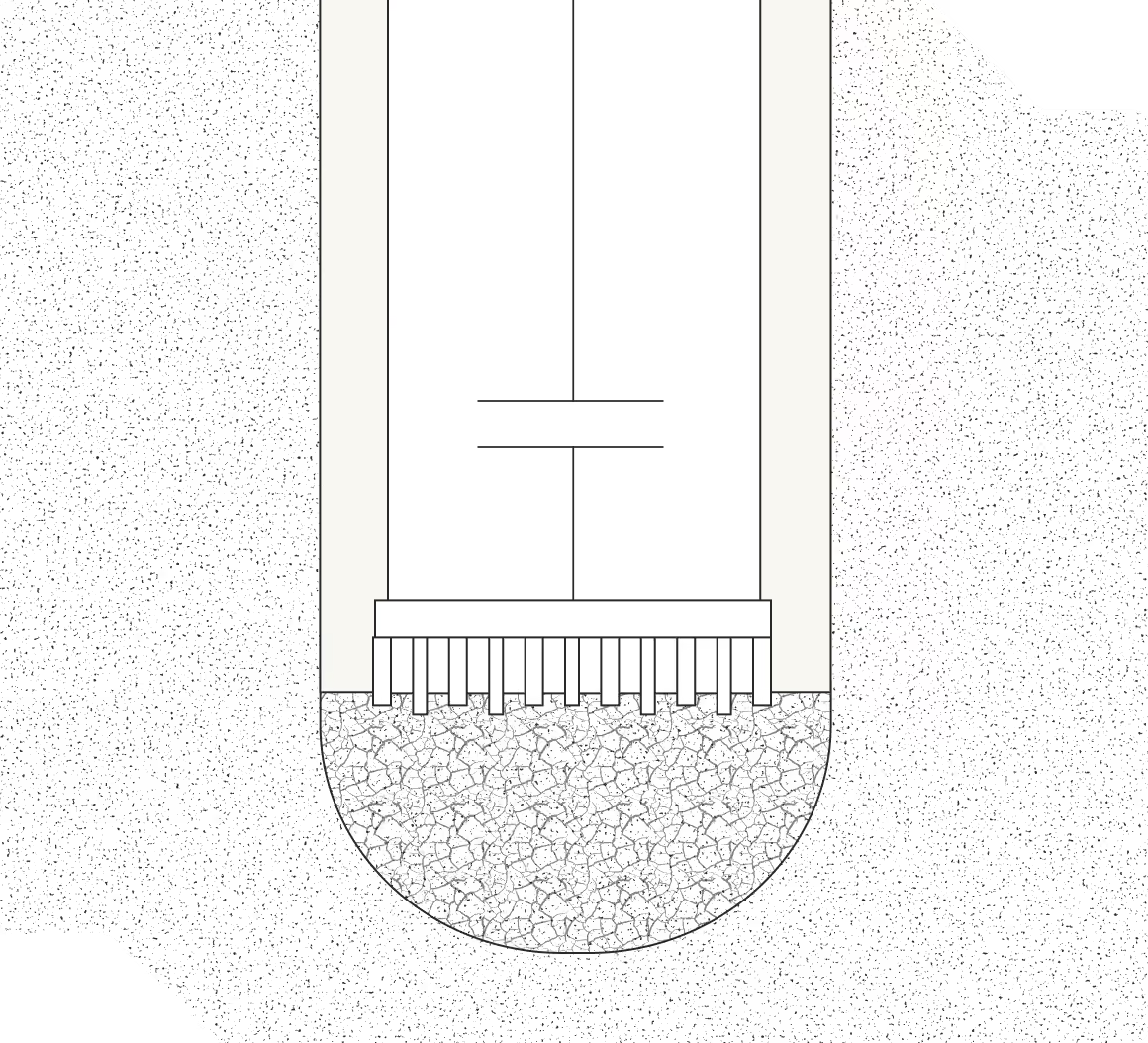
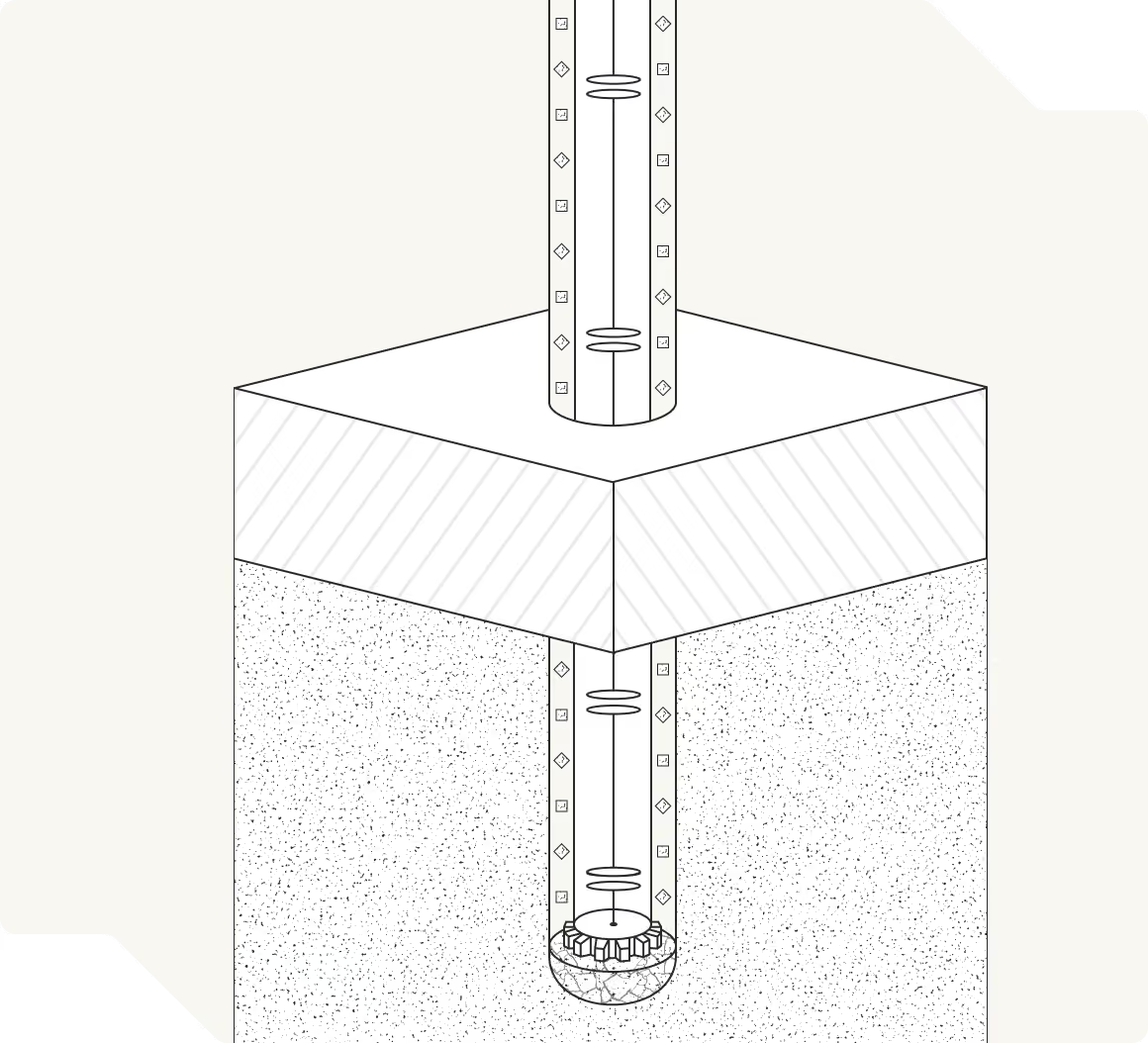
A high-voltage pulse fires between electrodes at the drill tip.
Electrical pulses at 500kV are formed by a generator. The speed at which pulses rise from 0 to 500kV is so fast that it breaks the rock instead of flowing through the drilling fluid. High voltage built from low-voltage components, manufacturable and fast to commission.
A plasma channel forms inside the rock, not on its surface.
Two electrodes at the tip create a field that exceeds the breakdown strength of the rock. With sufficiently fast pulses, the discharge runs through the rock, not the surrounding fluid, and fractures it from within. The reason lies in how rock and fluid respond electrically in the first moments of the pulse.
The channel creates a pressure wave that shatters the rock from the inside out.
Rise time, how fast voltage climbs during discharge, is the key engineering parameter. Shorter rise times concentrate the energy. The target: 50 to 100 nanoseconds, which works even at depth and is faster than the classical 500 nanoseconds used at atmospheric pressure.
Drilling fluid carries the fine cuttings away. Then it repeats.
The drill string does not rotate. That removes a major source of mechanical complexity and allows a much smaller surface footprint. Downhole power comes from a turbine driven by the circulating fluid, or from a cable, depending on depth. The same fluid carries the cuttings to the surface.
5 to 25 times less energy needed per cubic meter of rock
Electric Impulse Drilling breaks rock in tension
Rock resists being crushed far better than it resists being broken apart. Electric Impulse Drilling (EID) attacks the weaker direction and the energy demand drops. Nothing is melted, burned or vaporized.
Three numbers decide whether deep geothermal scales: energy demand per cubic meter, penetration rate per hour, and a cost curve that stays straight.
more energy-efficient than conventional mechanical drilling
200 MJ/m³ to break hard crystalline rock, against 1,000–5,000 conventionally in the same rock. Energy per meter is the primary driver of drilling cost. Less energy means smaller equipment, lower operating cost and better project returns.
rate of penetration in hard rock
Against 5–7 m/h for conventional drilling in granite or basalt. Every hour on site costs money, drilling or not. Faster penetration means fewer days on site and lower total project cost.
cost scaling with depth
EID costs scale linearly with depth. Conventional costs scale exponentially. Fewer bit changes and a smaller plant footprint keep costs from compounding, and the advantage grows with every kilometer.
.gif)
.avif)

Electric Impulse Drilling does not just make drilling cheaper. It makes system types viable that conventional drilling cannot reach at economically.
One percent of global superhot rock geothermal potential is around 63 terawatts, roughly eight times today’s global electricity demand.
Hydrothermal
Shallow, natural hot-water reservoirs. Conventional drilling already works here. EID makes it faster and cheaper.
EGS
Enhanced geothermal systems reach deeper crystalline rock through an engineered fracture network.
CLGS
Closed-loop geothermal systems seal the circuit underground. No fracturing, no injection water, no induced seismicity, no geological dependency.
Superhot Rock
Superhot rock geothermal starts above 374 °C, where supercritical fluid carries five to ten times the energy of conventional geothermal.
Here is what exists today.
years of electric impulse drilling research at KIT, TU Dresden and ETH Zürich.
active test facilities in operation.
First rock broken
A borehole drilled in granite with Electric Impulse Drilling at Telura test facility, 2026.
Simulation verified
Electric field simulations confirmed against measurement.
%20(1).avif)
The grid needs clean firm power that runs at night.
AI data-center demand is set to double by 2030 and electrification is accelerating. What the grid needs is clean firm power. Baseload power that runs at night, in still air, in winter. Renewables are taking a growing share, but they cannot deliver it alone.
Geothermal can. Available 24 hours a day, no imports, no emissions, minimal surface footprint. Once drilling costs stop scaling with depth, it can be sited where the demand is. The resource has always been there. The bottleneck has always been drilling. EID removes the bottleneck.
into geothermal startups in recent years. Capital is no longer the constraint on the category, drilling cost is.
feed-in tariff for first-of-a-kind projects under the German Geothermal Acceleration Act. Comparable frameworks are emerging across the EU and the US.
International Energy Agency scenario for next-generation geothermal by 2050, if project costs fall as expected. The drilling technology behind that is a market in the trillions.
.avif)
Frequently asked questions.
Electric Impulse Drilling (EID) is a drilling method that breaks rock with high-voltage electrical pulses instead of grinding through it mechanically. A pulse fires between two electrodes at the drill tip, forms a plasma channel inside the rock, and fractures it in tension. Nothing rotates, nothing touches the rock face, nothing is melted or burned. It needs 200 megajoules per cubic metre in hard crystalline rock, against 1,000 to 5,000 for conventional mechanical drilling.
No. EID is a drilling method, not a stimulation method. It breaks rock at the drill tip with high-voltage pulses; it does not inject fluid to fracture a reservoir. Telura can drill the well for a system that uses fracturing, but the focus is closed-loop, and closed-loop systems require no fracturing at all, so they carry none of the induced-seismicity risk associated with fracturing-dependent EGS.
Three things compound. Bits wear faster in hard crystalline rock, so they need replacing more often. Each replacement means pulling the entire drill string to the surface and running it back down. At five kilometers that is 24 to 48 hours with no meters drilled. And the deeper the well, the longer every one of those trips takes. Cost rises far faster than depth: a five-kilometer well is not five times a one-kilometer well.
No. The Earth is not a tank that slowly empties. It produces heat continuously, deep inside, and has done for four and a half billion years. It will keep doing so long after we are gone. Roughly 47 terawatts flows out of the surface at any moment. Humanity uses about 19. What can happen is that one spot cools down, if you pull heat out faster than the surrounding rock feeds it back. That is a matter of building the site correctly, not of running out.
Both of those work with heat: a torch or a beam heats the rock until it weakens, melts or spalls. Electric Impulse Drilling does not heat the rock. A high-voltage pulse forms a plasma channel inside it and splits it from within. The rock fails in tension, which is the direction it is weakest. Nothing is melted, burned or vaporised.
The physics rests on more than twenty years of research at KIT, TU Dresden and ETH Zürich, and boreholes have been drilled in granite in the laboratory. There is a validation agreement with SPRIND, Germany’s federal agency for disruptive innovation. The technology proven at prototype stage is at the brink of in-field application.
No. The rock breaks where the plasma channel forms, at the drill tip, and the fracture does not spread uncontrolled into the surrounding formation. There is no pressurised fluid driving it outward, which is what makes hydraulic stimulation propagate.
Three ways to take this further
Geothermal at scale starts with the borehole. The economics of geothermal are changing. EID is why.
Whether you need the borehole or the electricity or the heat. Drilling-as-a-Service and Build-Own-Operate. Let’s talk about your project.
Covering the energy transition? The story starts underground. Our media kit has the assets, the numbers and the contacts.
Follow our progress
Join our mailing list to stay in the loop of the latest developments.